
 3 weeks ago
18
3 weeks ago
18
For one week every June, the quiet, historic market town of Appleby-in-Westmorland, Cumbria, is transformed. It becomes the site of the largest and oldest traditional gathering of Gypsies and Travellers in Europe.
This is the Appleby Horse Fair, and for the uninitiated, it can be a sensory overload. This is not a “fair” in the modern sense—there are no ticket gates, no official schedule, and no central arena.
It is a living, breathing cultural event, a centuries-old tradition where thousands of Travellers and Gypsies gather to trade, meet family, and celebrate their way of life.
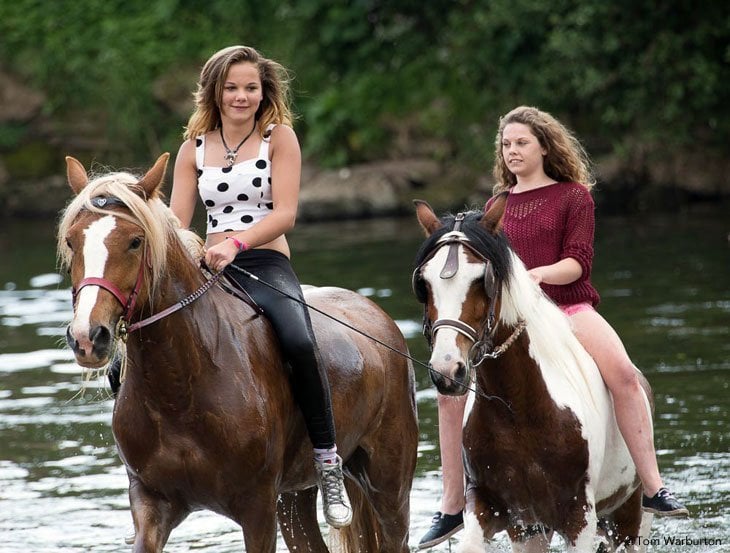
Over the years, I’ve spent time at the fair with my camera, attempting to capture the unique energy of its three main “arenas”: the chaos and joy of the horse washing in the River Eden, the raw speed of the “Flashing Lane,” and the vibrant community atmosphere on Fair Hill.
This guide is a collection of those experiences and photographs, combined with the practical, evergreen advice a first-time visitor or photographer needs to understand the event, stay safe, and be respectful.
What is the Appleby Horse Fair? A Brief History
The fair is a traditional annual gathering for Romani and Irish Traveller communities, attracting around 10,000 Travellers and over 30,000 visitors, or “spectators,” to the town.
While often linked to a 1685 charter from King James II, its legal status truly rests on the concept of ‘prescriptive right,’ meaning it has simply existed through custom for time immemorial.

By the 1770s, it had evolved into the “New Fair” for horse dealers and drovers, and by the 1900s, it had become a major Traveller occasion.
For the Traveller community, this is a “Mecca”. It’s a vital social event, a place to catch up with old friends, make new ones, and conduct the business that is core to their heritage: the buying and selling of horses.
The Three Main Events: What to See and Photograph
The fair’s activities are spread across three main locations in and around the town.
1. The River Eden: The Washing
The most iconic (and arguably most photogenic) part of the fair takes place in the heart of Appleby town, on the road known as The Sands.
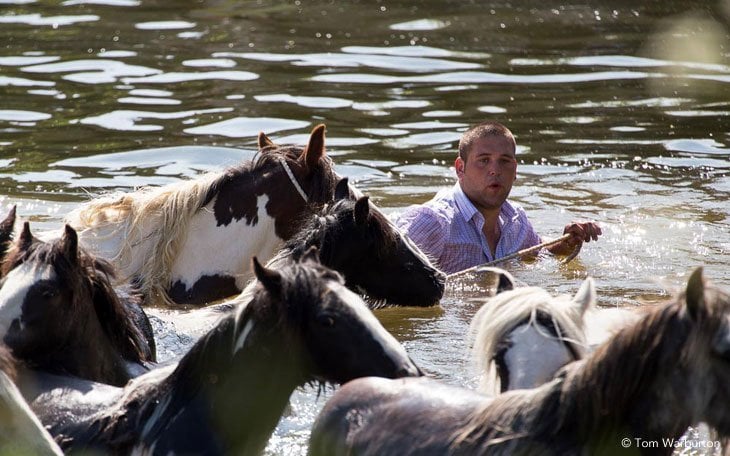
Here, the River Eden flows wide and relatively shallow, and it’s where the horses are brought for their traditional wash.
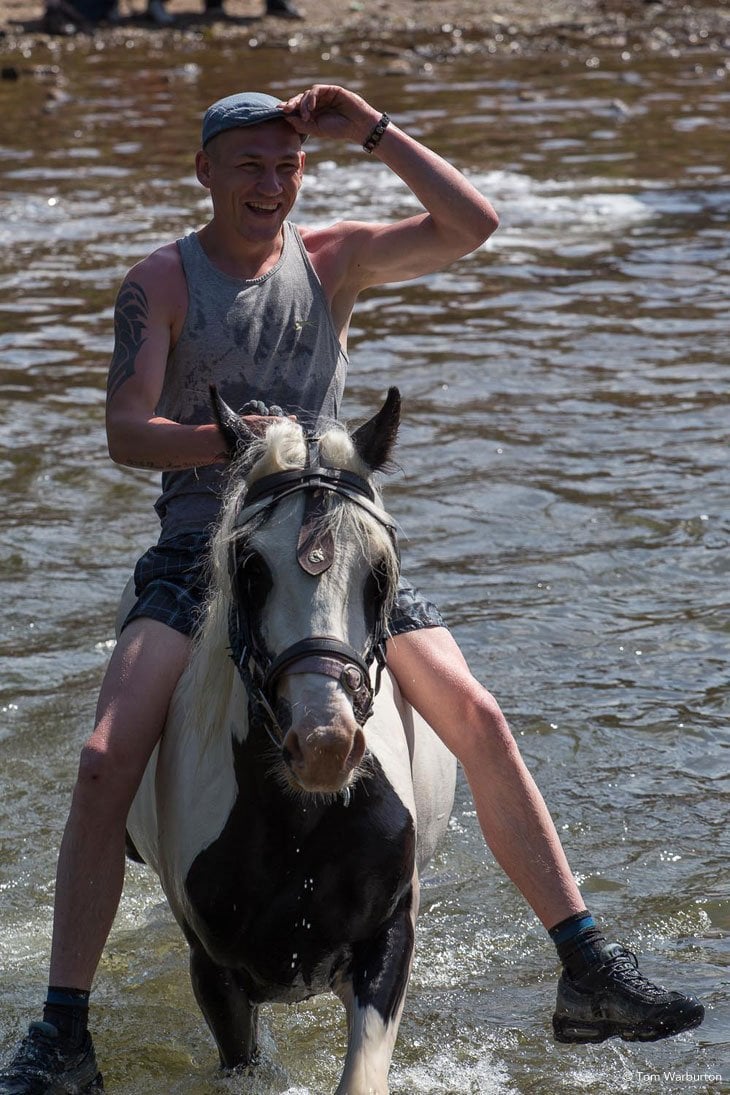
From morning until evening, this area is a hive of activity. Young men ride their horses bareback, often in groups, into the fast-flowing water.
It is a fantastic spectacle of horsemanship, noise, and splashing.

For a photographer, it’s a chaotic and beautiful scene. You’ll see everything from tiny ponies to massive, powerful Cobs, all being scrubbed and bathed before being shown off.
The atmosphere is one of excitement and good humour, and it’s the most accessible part of the fair for spectators, with crowds lining the river banks and bridge.
2. The Flashing Lane: The Trotting
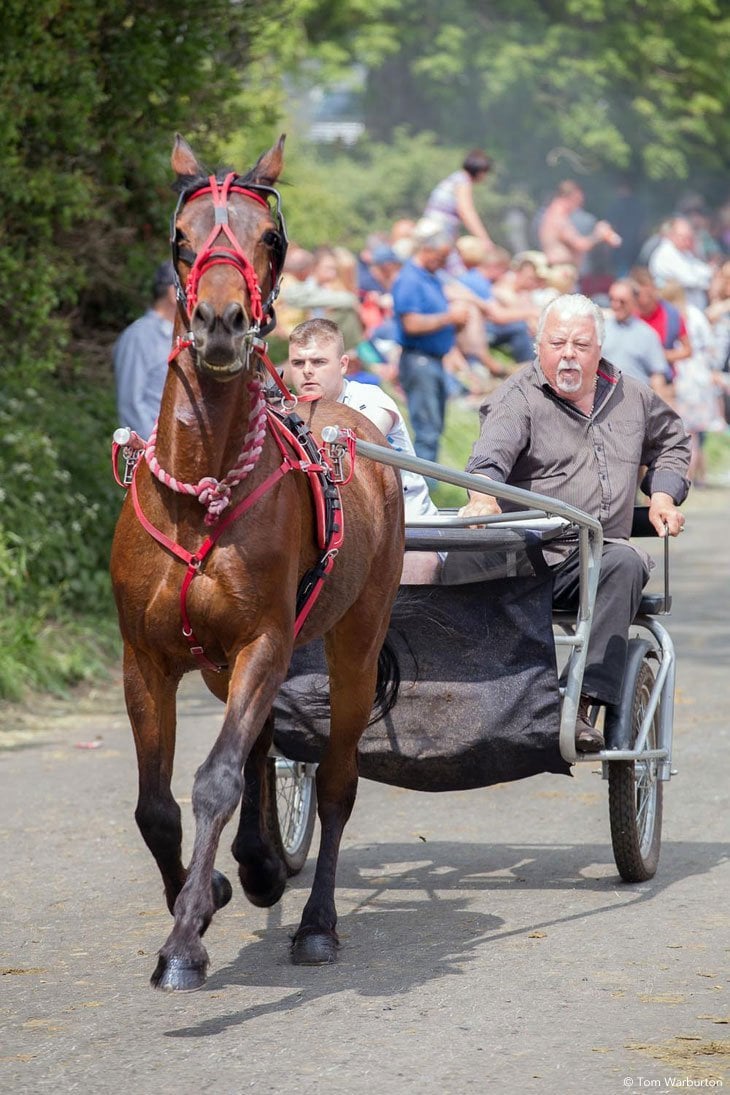
If the river is about washing, the “Flashing Lane” is about business. This is where horses are shown off to potential buyers, and the primary way to do that is to show their speed.
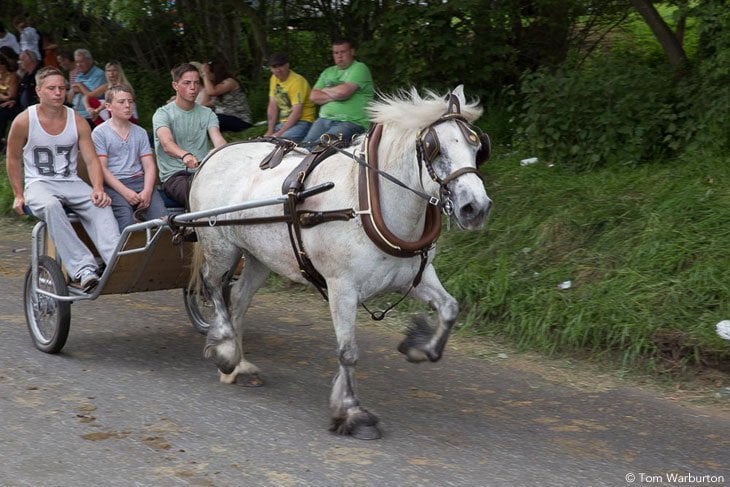
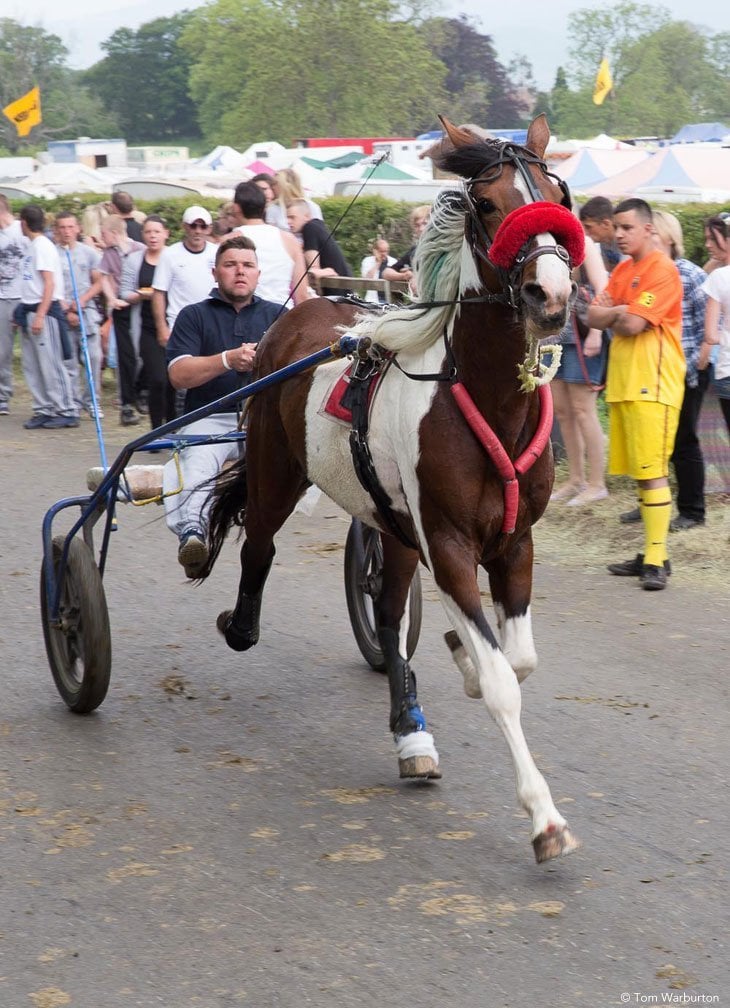
Located on the Long Marton Road outside of town, this wide, straight lane is closed to traffic and becomes a temporary race track. Horses, mostly Cobs, are “flashed” or “trotted” up and down at incredible speeds.
They are sometimes ridden, but more often, they are harnessed to lightweight, two-wheeled “sulkies” or traditional wagons.

This is where the fair’s energy is most raw and, for a visitor, most dangerous. My own experience here is that while there are barriers, separating the crowds from the horses is “not always that easy”.
The atmosphere is electric, filled with the sound of hooves, wheels, and shouting. You must stay alert.

3. The People & Fair Hill: The Heart of the Fair
The third key location is Fair Hill, a large field above the town that becomes the main hub and encampment.
This is where many families park their caravans and trailers, and where you can see stunning, hand-painted vardos (traditional horse-drawn wagons).

This is also where the main market is, selling everything from traditional Traveller goods to harnesses, hardware, clothing, and food.
For me, this is where you feel the true sense of community. On my last visit, the mood was one of “good humour”. The talk was of horses, sunburn, and catching up with friends.

This is the best place to engage in conversation and, as I did, ask for portraits.
The fair attracts thousands of Gypsies and thousands more tourists, all mingling on this hill. It is a fantastic, vibrant cross-section of cultures.

A Practical Guide for Visitors & Photographers
The Appleby Horse Fair is not a sanitised event. It is an authentic, and at times intense, cultural gathering. Visitors attend at their own risk, and a little preparation goes a long way.

When to Visit
The fair traditionally runs from the first Thursday in June for one week, ending the following Wednesday.
The main days for visitors are Friday, Saturday, and Sunday. If you come on the following Monday or Tuesday, you will be disappointed, as most people will have left.
Safety: Your Number One Priority
- Be Horse Aware: This is the most important rule. Fast-moving horses are everywhere, not just on the Flashing Lane but also in the streets of Appleby. Be aware of your surroundings at all times.
- Road Safety: Police advise extreme caution on the roads leading to Appleby, like the A66 and A685. Be prepared to encounter slow-moving, horse-drawn vehicles.
- Crowds: The fair is extremely crowded. Be sensible with your belongings; as with any large crowd, be wary of pickpockets.

A Note on Photography & Etiquette
As a photographer, this event is a goldmine, but it’s vital to be respectful.
- Be Patient: Don’t just stick a lens in someone’s face. Some people can be “iffy” if you are intrusive.
- Ask Permission: Especially for portraits. I’ve found most people to be friendly and open when asked politely.
- Tell the Story: Capture the whole scene: the vardos, the details on a harness, the market stalls, and the interactions between people, not just the “action” shots.
- Be Respectful: You are a guest at a cultural gathering. A smile and a “hello” go a long way.
Getting There and Parking
- By Train (Recommended): The easiest way to visit is by train on the scenic Settle to Carlisle line. Appleby Station is just a 10-minute walk from the centre of the action.
- By Car: If you must drive, be prepared for significant delays and traffic. Do not try to park in the town centre.
- Parking: Temporary car parks are set up for the fair, often at Appleby Castle, the Grammar School, and the local football field. Follow the official signage and expect to pay. You can find traffic and parking maps on the official website.
- Road Closures: Be aware that The Sands (for the river washing) and the Long Marton Road (the Flashing Lane) are closed to vehicle traffic during the fair.

Accommodation
If you plan to stay overnight, accommodation is “rarer than hen’s teeth”. Most hotels, B&Bs, and campsites are booked up years in advance by regular visitors.
You will need to look in towns further afield, like Penrith or Kirkby Stephen, and drive or take the train in.
Facilities
- Food & Drink: Many pubs and shops in the town centre actually close during the fair. It’s wise to bring your own water and snacks. Food vans are available, especially on Fair Hill.
- Toilets: There are public toilets in town (at the Public Hall and in Broad Close car park) and numerous Portaloos near the main areas.
- Cash: There are ATMs at the Co-op, Spar, and Post Office, but they will be busy and may run out. Bringing cash is advisable.







 English (US) ·