
 1 month ago
20
1 month ago
20
It’s the depths of winter, and let’s be honest—it is properly cold out there. The wind has that biting edge to it, and the grey skies seem to be hanging low over the rooftops.
But if you are out and about this week, perhaps just doing the mundane weekly shop, keep your eyes peeled. You might spot a flash of colour that simply doesn’t belong in a drab British winter.
A splash of peachy-pink, a dash of bright yellow, and a crest that looks like it’s been styled with hair gel. The Vikings have landed.
Every few years, we experience what naturalists call a “Waxwing Winter”—a massive irruption of these stunning birds from Scandinavia. This winter, and especially early 2026 is one of them.
It is one of the most exciting wildlife spectacles in the UK, and unlike most nature watching that requires you to hike up a mountain, this one is often best viewed from your local supermarket car park.
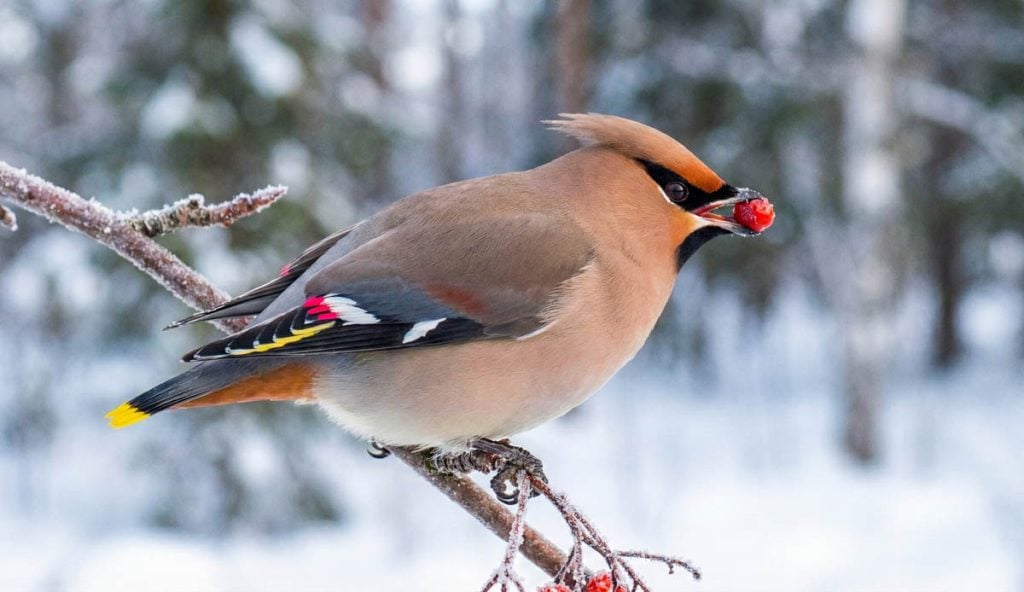
The Punk Rockers of the Bird World
If you haven’t seen a Waxwing (Bombycilla garrulus) before, you are in for a treat. They don’t look like they belong here. They look exotic.
They have a distinct, swept-back crest and a bandit-like black mask that gives them a properly grumpy expression.
But look closer at their wings. You’ll see tiny, bright red tips on the secondary feathers. These tips aren’t feathers at all; they are flattened extensions of the feather shaft that look exactly like drops of old-fashioned red sealing wax. Hence the name.

Interestingly, these red tips are a status symbol. Older, more dominant birds tend to have more of them, signaling to potential mates that they are survivors.
Why The Invasion?
Waxwings don’t migrate to the UK every year in large numbers. They are “irruptive” migrants. They only come here when they have no choice.
Usually, they are perfectly happy spending their winters in the boreal forests of Finland and Russia. But occasionally, conditions create a perfect storm.
If the berry crop in Scandinavia fails, and the population of birds is high, they are faced with starvation at home. This forces them to cross the North Sea in their thousands. It’s not a holiday; it’s a desperate raid for food.
This winter, 2026 is a boom for waxwings in the UK. A poor berry crop in the usual Scandanavian and Russian haunts, yet here in the UK we are overflowing in berries this year. A waxwing winter.
Unlike our resident Great Spotted Woodpeckers or Pied Wagtails, which you can see year-round, Waxwings are fair-weather friends—or rather, foul-weather friends.
Supermarket Safaris
Now, here is the funny part. You won’t usually find these birds in our deep, ancient woodlands. You will find them in town centres, industrial estates, and, most famously, supermarket car parks.
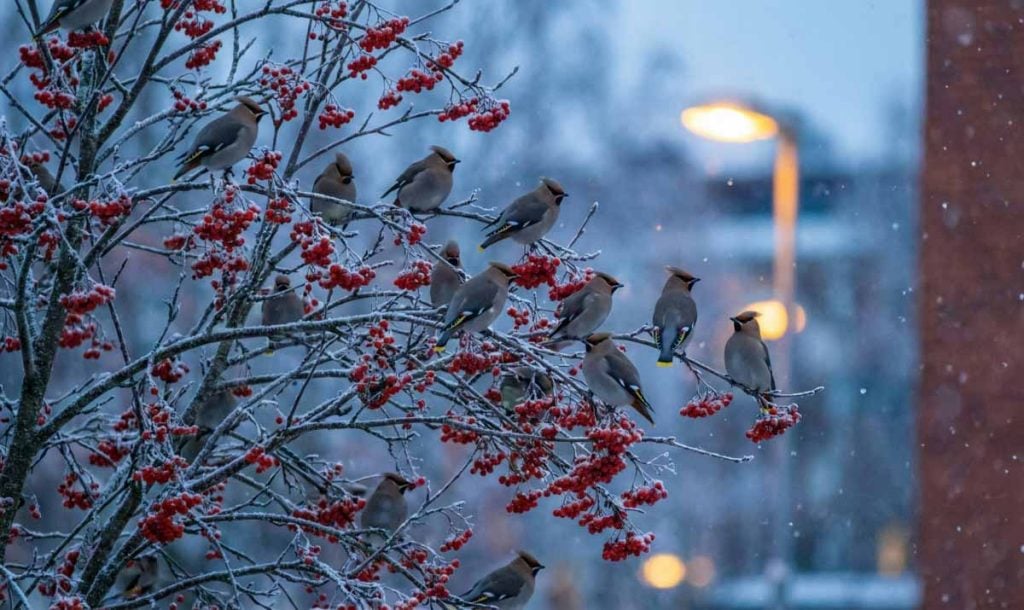
Why? Because urban planners love planting ornamental Rowan trees (Mountain Ash) to make concrete car parks look nicer.
To a starving Waxwing, a Sainsbury’s or Tesco car park looks like an all-you-can-eat buffet. They are relatively fearless, often dropping down from the trees to gobble berries just feet away from shoppers pushing trolleys.
The Drunken Feast
There is a wonderful, if slightly comical, side effect to their diet. Because they often arrive late in winter, many of the berries they eat have started to ferment on the branch.
Waxwings eat a staggering amount—often double their own body weight in berries every single day.
If you or I ate that much fermented fruit, we’d be in trouble. However, Waxwings have evolved a massive liver specifically designed to metabolize alcohol rapidly. They can process the ethanol fast enough to stay (mostly) sober.
That said, if you watch them long enough, you might occasionally spot one looking a bit wobbly on a branch if it’s been a particularly heavy lunch!
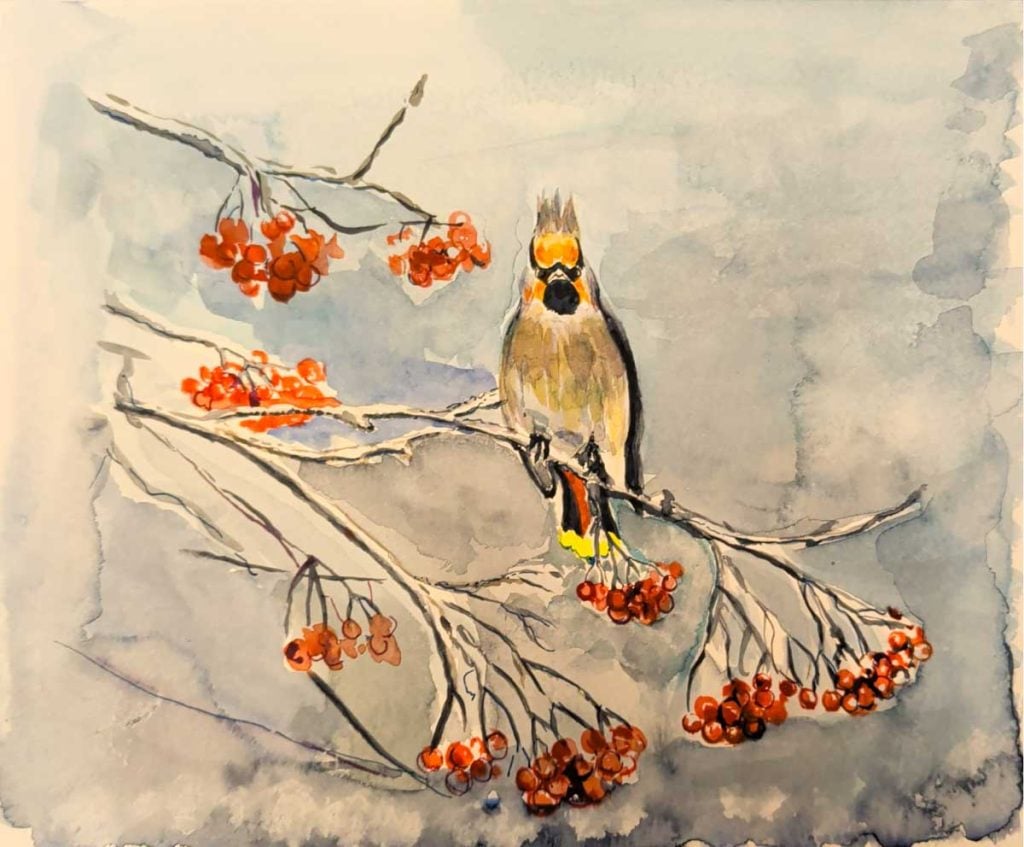
A Fleeting Wonder
So, keep your eyes peeled this winter. Listen for their call—a high-pitched, trilling sirrr-sirrr that sounds like a tiny silver bell.
They won’t stay forever. Once the berries are stripped, they will move on, eventually returning to the northern forests as quickly as they arrived.
But for now, they are a welcome reminder that even in the greyest months of the year, nature can still surprise us with a riot of colour.
If you enjoyed discovering the science behind this winter spectacle, why not explore the physics of another natural wonder?” Why is the Sky Blue? Unveiling the Physics of Nature’s Palette
















 English (US) ·