
 7 hours ago
4
7 hours ago
4
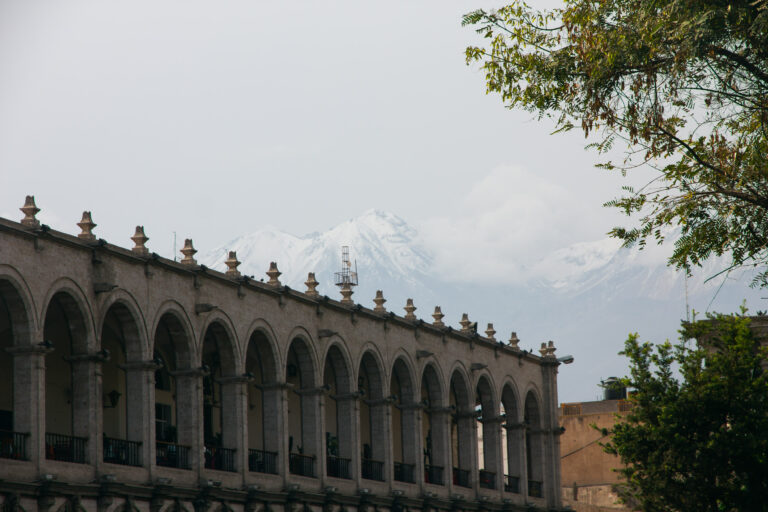
Affectionately known as the White City by locals, Arequipa is maybe Peru’s most liveable city. It basks in eternal spring at the skirts of three huge conical volcanoes.
As well as an unforgettable skyline, the volcanoes provided Arequipa with sillar, a glowing white stone, with which to build the city. Humming with bars, galleries and with a perfect climate, you too will surely keep extending your stay.
Why you should visit Arequipa
Arequipa benefits a lot from sitting on the road from Lima and Huacachina to the top tourist attraction of Cusco, but even without a convenient location, people would travel to soak it all up.
Indeed, it draws a huge amount of South American tourists seeking sun and culture. That it is on the road to everywhere is a bonus, especially for those on shorter trips who can easily work it into their plans.
I found Arequipa one of those backpacking traps – places where you can easily be stuck from how easy and enjoyable life there is. After weeks on an isolated archaeological site, I allotted five days for pottering about the cafes, museums and partying for Peruvian Independence. After this passed in a flash, I just saw no reason to not stay another five.
How to get to Arequipa
Despite bus journey durations that seem ludicrous for anyone not used to getting around Peru, Arequipa is very well connected.
Most people reach Arequipa from Huacachina or Lima to break up their journey to Cusco. It is also just 6 hours from Puno on Lake Titicaca, and even the 15 hours it took me to arrive from La Paz was very doable.
- From Lima – 17 hours
- From Huacachina (Ica) – 13 hours
- From Puno – 6 hours
- From Cusco – 11 hours
- From La Paz – 15 hours
BOOK YOUR transport TO Arequipa
Where to stay
Within Arequipa, there are two main contenders for where to stay – the thick of things in the city centre or the more laid-back Yanahuara District with its wonderful vistas of the volcanoes.
I personally opted for the city centre as this is where most of the hostels are. In Latin cities, you often suffer sleepless nights from a crescendo of traffic noise and car horns, but Arequipa’s centre is not afflicted by this. It was tranquil, had access to every amenity I needed and was closest to all of the attractions.
Yanahuara has some brilliant qualities too. If you ask locals where they eat or choose to hangout, they will say Yanahuara.
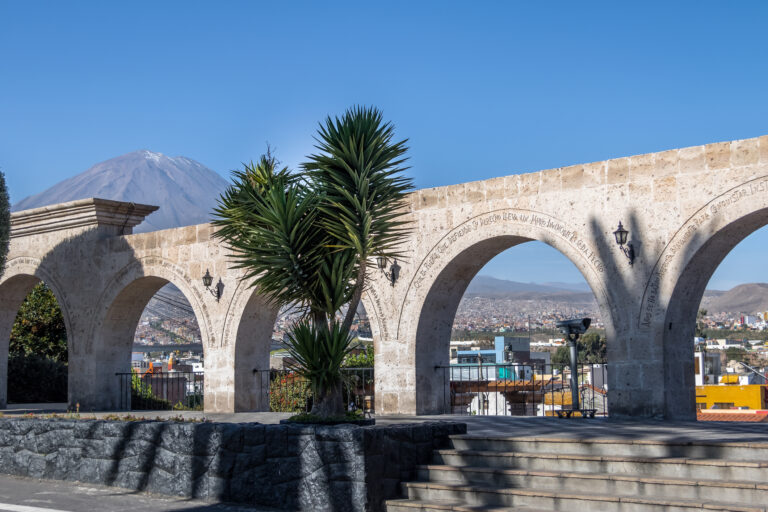
You will get a more authentic picture of life in Arequipa in this area as well as probably the best view of the city from Mirador Yanahuara. This columned sillar platform perfectly frames the volcanic peaks against the sweep of the city.
Most people come for the adventures around Arequipa, especially the Colca Canyon. These picks are perfect for a quiet start or for recharging between excursions.
One of the best spots in town for the social, central, lively traveller experience
A colonial‑style building, centered around a quiet open‑air courtyard with gardens
Just steps from Plaza de Armas, putting every major sight, cafe, restaurant, cathedral, and the best views of Misti Volcano within your reach
A colonial boutique hotel with a Roman-bath spa in the heart of Arequipa’s historic center
Unique riverside setting above the Chili River, surrounded by lush gardens and traditional volcanic-stone architecture
Best things to do within Arequipa
Santa Catalina Monastery
When travelling you can get a bit tired of religious buildings – every town has a cathedral billed as a must-see, but this is a real standout. In fact, it is more of a city within Arequipa than it is a building.
Once you enter its gates and pass behind its towering walls you find yourself in a tranquil maze of fountains, gardens, chapels and courtyards.
The colours are utterly striking – entire streets adorned with geraniums are painted aquamarine or ochre reds. I think I took about 100 photos! The view toward the volcanoes from the monastery’s great tower was particularly beautiful.
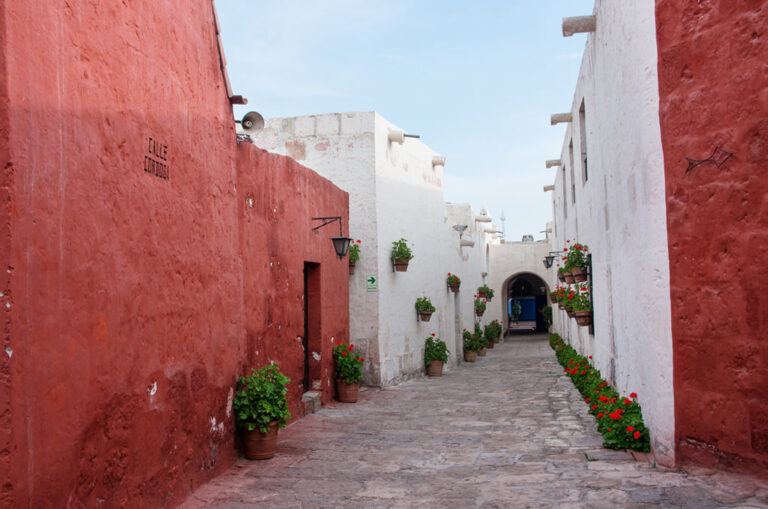 Calle Córdoba, one of the most picturesque streets inside the Santa Catalina Monastery
Santa Catalina was founded over 400 years ago as a nunnery, and still has a large religious community within the areas not accessible for tourists.
I could hear their singing and prayers as I walked through the monastery. Many cells are kept exactly how the nuns once lived, making you feel as if you had time travelled and intruded into someone’s bedroom. The chapels are also decorated with stunning religious art.
Entry costs 40 soles, and a guide will cost another 30 soles.
Museo Santuarios Andinos
Arequipa was not built on top of the ruins of an Inca city like many others in Peru, but the country’s most iconic civilisation was active on the surrounding volcanoes.
The Incas had a practice where they would sacrifice children to the mountain god believed to present on top of huge mountains. Five-hundred years ago, a fourteen year old girl was brought 4800m up Volcan Misti and clubbed to death. Her body was preserved in ice for hundreds of years. Until an American explorer encountered it on Mount Ampato in 1995 and carried it down to Arequipa.
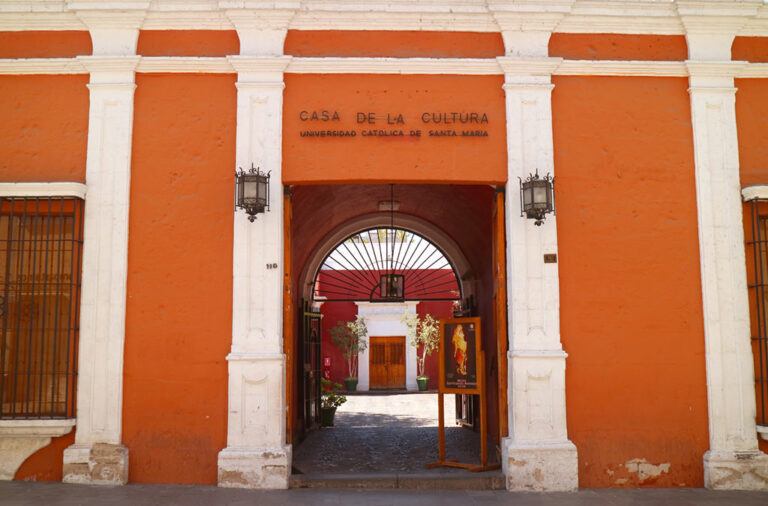 Arequipa’s Casa de la Cultura hosts exhibitions, cultural events, and local art displays
She has now been named Juanita, and the museum, somewhat macabrely, houses her incredibly well-preserved body. Her hair and nails are perfectly intact, and you could imagine that she is asleep from certain angles. This museum tells her story using the selection of artefacts found surrounding her.
I have never been to one quite like it – it explores an ancient civilisation, utterly alien to me, literally using a human face. Everything from the specialised Inca walking shoes to the intricate textiles, to what Juanita ate for her final meal were utterly fascinating, and so removed from the comfortable, modern city of Arequipa.
The museum is a couple of blocks from the Plaza de Armas and entry costs 20 soles.
To learn more and get a broader local context, it’s a great idea to do a walking tour. We recommend this 2.5-hour tour with a local guide who truly knows the city.
It’s pay-what-you-want, so the guide is truly motivated to let help you see the city in a different way. You’ll get the perfect introduction to Arequipa.
Alpaca Mundo
Have you even been to Peru if you have not seen an Alpaca?
Alpaca Mundo, a free-to-enter petting-zoo, will give you your fix of these iconic cuddly animals. I also found the demonstrations of indigenous weaving techniques very interesting.
Peru’s textiles are some of the best in the world thanks to alpacas and their cousins, the vicunas. Learning how the wool has been spun into ponchos for centuries and dyed bright colours, in between petting alpacas, was fascinating.
Arequipa is also a good place to buy an alpaca jumper, either at the San Camillo Market, or in the selection of designer alpaca shops in the city centre. I bought a designer baby-alpaca jumper here and it is one of my favourite wardrobe staples.
Mirador Yanahuara
The view of Arequipa from this viewpoint was my favourite in Arequipa. It is located a twenty minute walk from the city centre which crosses the fast-flowing River Chili.
 (diegograndi/iStock)
Mirador Yanahuara is a platform composed of ten arches made of sillar stone, purpose built for people to enjoy the panoramic views of Arequipa’s volcanoes and the city. The first time I visited, it was National Alpaca Day, featuring a magnificent parade of cuddly creatures. Live music shows or dance recitals are often held up here too. I found myself often returning for sunsets.
Plaza de Armas
It is customary for the main square of Peruvian cities to be called the Plaza de Armas, so I have visited many squares of this name, but the one in Arequipa’s is the pick of the lot.
Its whole perimeter is made of radiant sillar stone. One entire side is taken up by the huge Catedral de Arequipa, with its soaring towers, now rebuilt after an earthquake in 2001. Elsewhere, colonnaded porticos ring the square. The second floor of the surrounding buildings host many bars, which are the perfect places for a drink with a view of the plaza and the volcanoes.
The centre of the plaza also has a grand fountain. From the fountain, you can look straight ahead at the cathedral and see the snowcapped summit of Volcan Chanchi in one view. Just magnificent.
Eat and drink your way through the city
Arequipa is one of those cities that seem custom-made for getting lost and encountering something interesting on each street.
The colonial city centre built of sillar is simply gorgeous, and with the constant sunshine of Arequipa, it is so easy to sip iced latte after iced latte in the sun and admire the street scenes. Arequipa is also home to an influential chocolate brand in Peru called Iberia, and they have a flagship store offering a brilliant range of award-winning chocolate.
The churches in Arequipa are appropriately ornate for such a beautiful city. A friendly barista at my regular cafe, Isidro Comedor, gave me a post-it note with all of her favourite churches on, and I had a brilliant afternoon using it as a guide.
They were Catedral de Arequipa, San Francisco, Santa Teresa and Compania Iglesia. This is local knowledge being beamed directly to you, readers!
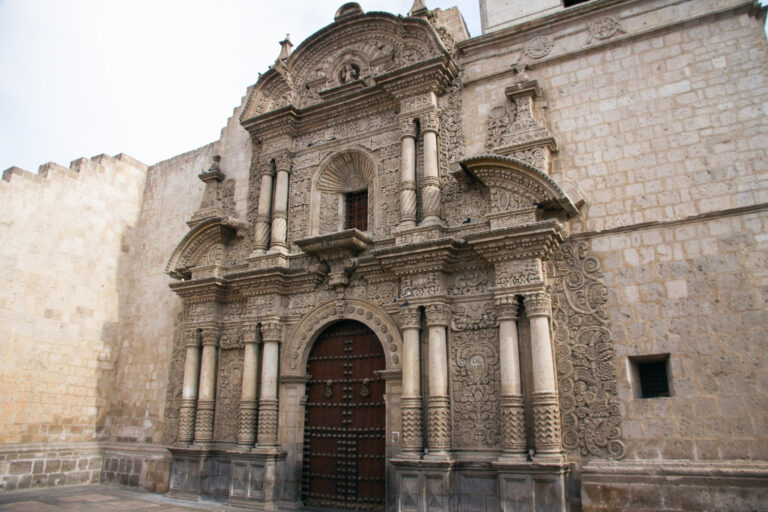 Iglesia de la Compañía de Jesús, located right off the Plaza de Armas
 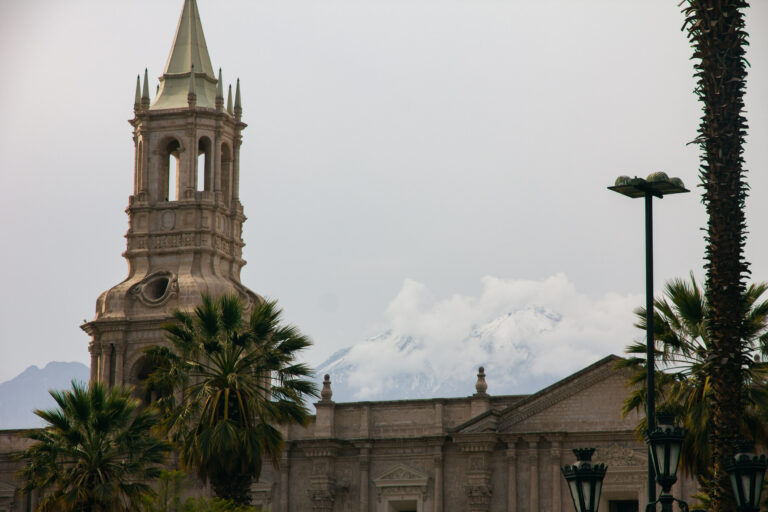 Arequipa Cathedral’s iconic tower
Another brilliant neighbourhood to explore is San Lazaro, the oldest part of the city.
Streets weave through faded colonial mansions interspersed with hipster cafes and bars. The locals love decorating with flowers, which adds a special something to this area. I am not sure if I just got very lucky or if it is a permanent feature, but when I was in San Lazaro, there was a huge concentration of classic cars parked on the streets. It brought the travel cliche of a land where time stood still to life.
The San Camillo market in Arequipa is also a worthwhile experience. It is one of the largest I visited in South America, and almost everything seemed for sale.
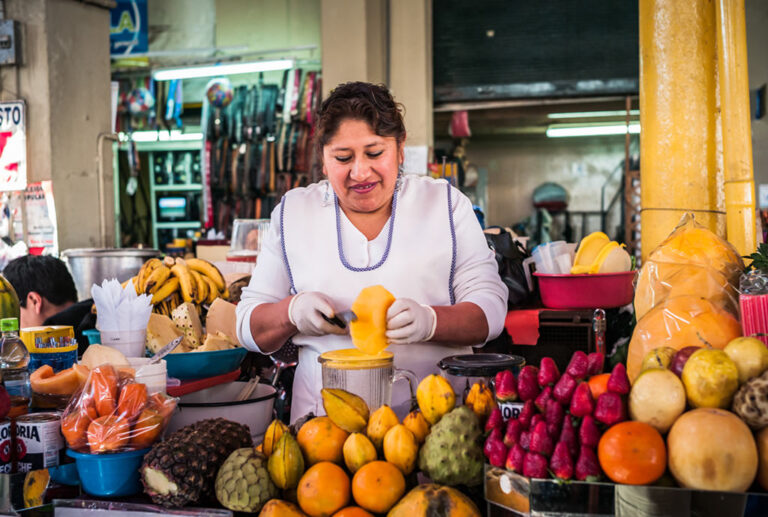
I bought an orange, pineapple, passionfruit and mango juice for $1, and wandered about. I think I saw about fifty variations of potatoes and bought a Panama hat. It is also the ideal place to sample Queso Helado, an ice cream made with cheese which is a local specialty. I promise it does not taste as weird as it sounds.
Arequipa is also a party city. I spent Peruvian Independence Day here and partied hard in celebration of Peruvian freedom.
The hostels are popular spots with locals for some pre-drinks before hitting the clubs. Forum was my pick to dance the night away.
Best excursions from Arequipa
1. Colca Canyon: Peru’s massive gorge & the second deepest on Earth
This is the best known attraction in Arequipa, and it is famous for a reason. It is the world’s second deepest canyon, just a hair’s breadth’s shallower than its neighbour Cotahausi. It is even twice as deep as the Grand Canyon.
What I found most spectacular about the canyon is that it is lived in. Indigenous people have scraped a living from this plunging gash for centuries by creating terraces and irrigation systems.
The contrast between the verdant fields at its base and the sheer rock ending in snowcapped peaks above is wonderful. Interestingly, the source of the Amazon lies just hours walk away.
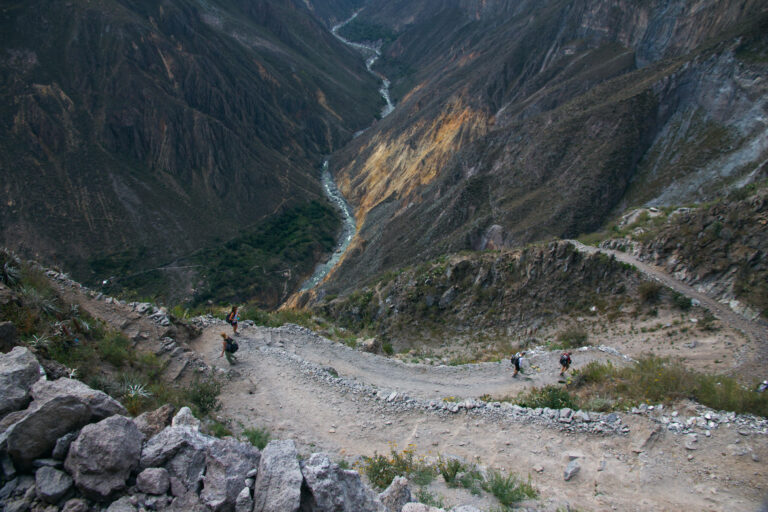
Colca also hums with life. Most tours begin at a viewpoint called Cruz del Condores, where many of the world’s largest birds nest. Watching them soar on thermals high above the canyon was pretty unforgettable.
It is also home to many Viscachas, a bizarre-looking creature that looks like a cross between a rabbit and a squirrel. I had no idea that these even existed until I saw them darting between cacti on the walk down.
We recommend this high-rated Colca Canyon trek, which follows a structure similar to Tom’s experience, packed with epic viewpoints and including an overnight stay inside the canyon.
You’ll descend a full thousand meters while strolling through ancient terraces still farmed by locals, and soak in hot springs before the climb back out. The tour is priced at $55 and covers transportation and accommodation.
The most common duration to spend in the canyon is a two-day, one-night hike to an oasis at the base and then climb back out. Day trips just to Cruz del Condores are available for those in a pinch with time.
The tours begin incredibly early at 3am as the canyon is four hours from Arequipa. I got a bargain tour for 70 soles ($20) by shopping around in the tour operators around the Plaza de Armas.
After breakfast and bird watching at Cruz del Condores, you walk down into the canyon, a whole thousand metres of descent. It was stunning to see the river going from a thin blue ribbon at the top, to a raging torrent when you reach the base.
The rest of the walk is fairly easy, strolling through barely changed indigenous settlements still farming on their ancient terraces.
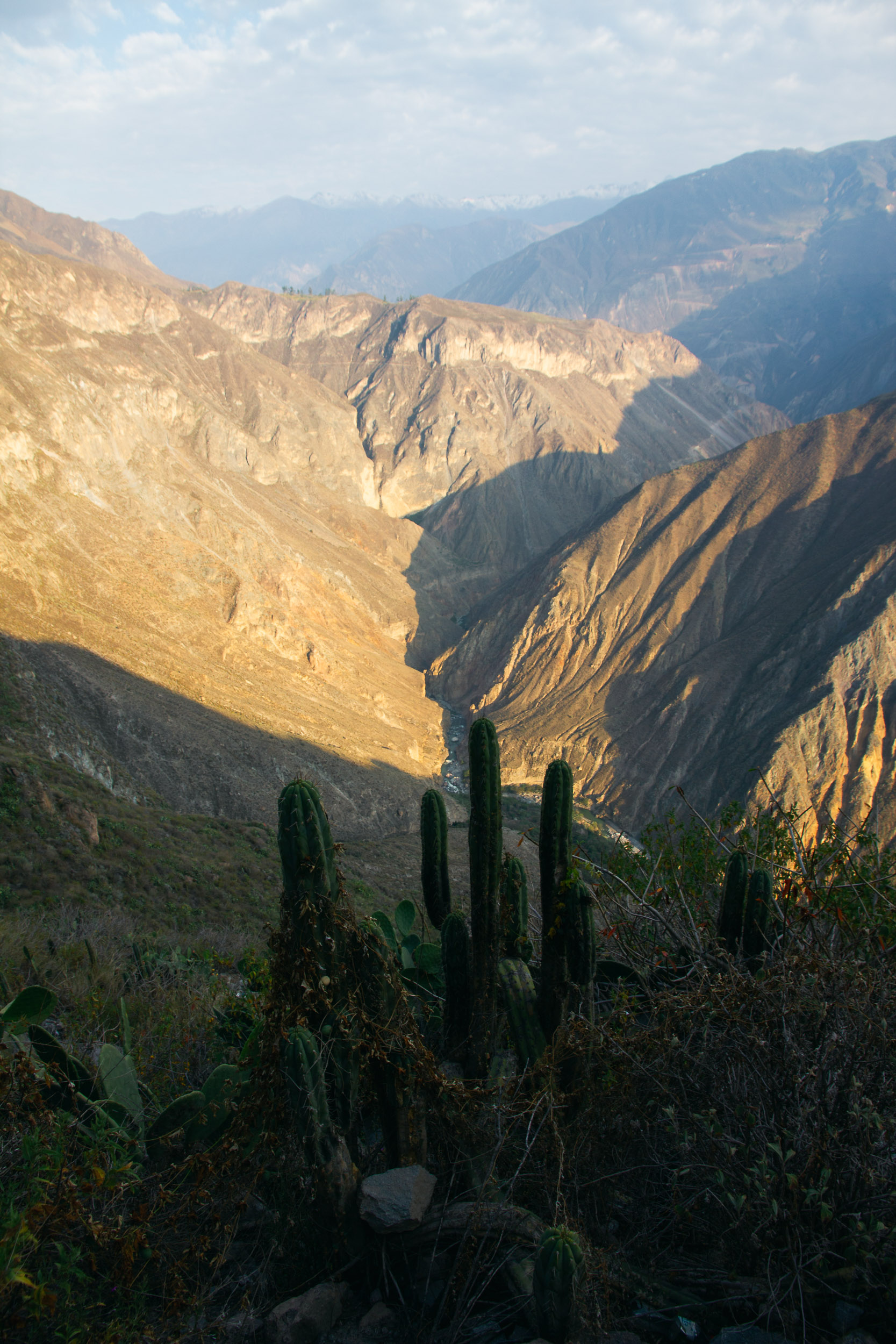
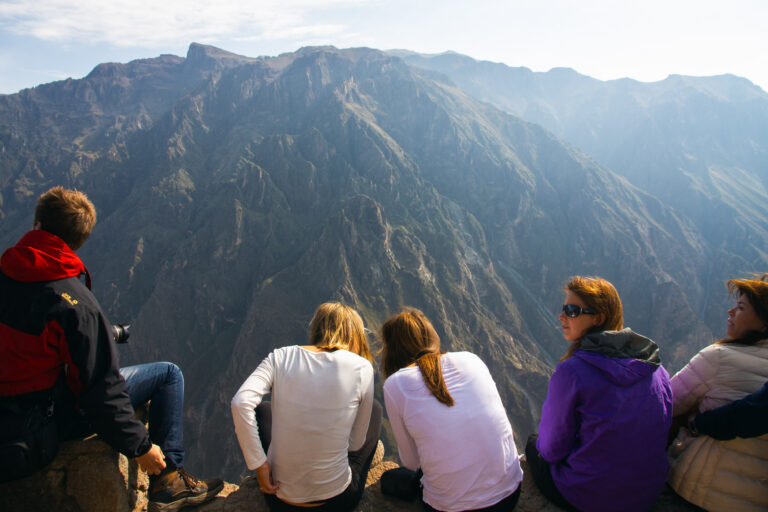 View from the Cruz del Cóndor viewpoint
The climb out is tough. It is a whole thousand metres up. Even with lots of time to rest, it is a serious undertaking. Perhaps fortunately, I suffered food poisoning from a dodgy Pisco Sour, the national drink of Peru made with egg whites, and got given a mule to ride out. There is always a silver lining.
On the way back, tours will take you to the Chacapi Hotsprings. A relaxing soak in mineral rich waters bubbling up from the earth is well deserved after that kilometre-high slog.
2. White water rafting
For adrenaline junkies, Arequipa provides the goods with multiple river options for rafting. The most accessible is the Chili River that runs through the city.
Twenty minutes upstream from the city, there are 7km of Class II and III rapids, essentially fast and very fast moving water. Plus the option of a Class IV drop (very powerful water) for those who fancy it. The backdrops of the Chachani and Misti Volcanos add a special something to this liquid adventure.
Tours to the Colca Canyon can also be bundled with a day’s white water rafting.
Get your adrenaline pumping as you raft down Class II–III rapids on the Chili River, with Arequipa’s iconic volcanoes towering above you.
It’s safe but still delivers lots of fun drops and rapids, so it’s a good beginner rafting experience. See details and availability on Viator.
3. Laguna de Salinas – a vast Andean salt flat
One of the most iconic views in South America is the famous salt flat at Uyuni in Bolivia, but Peru is also blessed with an example of this surreal geography in Laguna de Salinas.
This high altitude salt lake dries into a salt flat between May and December, giving visitors the chance to experience the perspective altering weirdness of a wholly white and flat landform. There are even flamingos in the residual pockets of water.
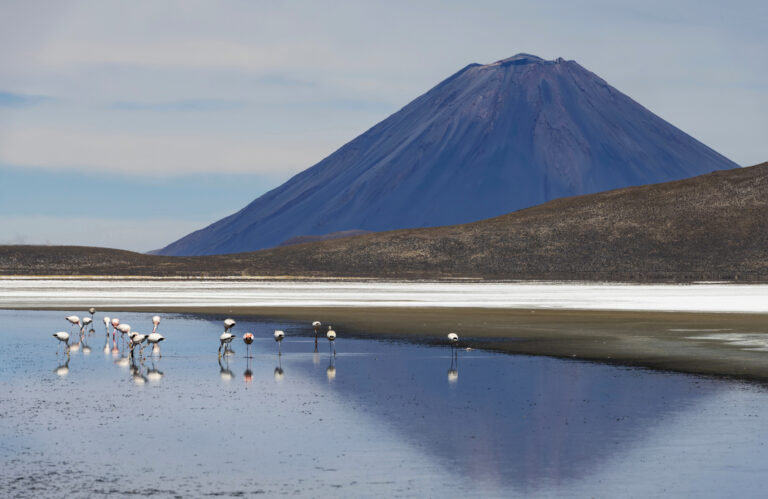 (Janek/iStock)
I personally skipped this attraction as I visited the Uyuni slatflats, and those of Jujuy in Argentina, but for those who have never seen one, I would recommend it as there is nothing quite like it in the world. Tours typically cost 120 soles.
Editor’s note: this Salinas Lagoon guided trip takes you deep into the highlands, with flamingos, vicuñas, and Andean volcanoes on full display. Check it out on GetYourGuide.
4. Climb Arequipa’s volcanoes
Not content with just admiring the snowcapped volcano peaks from a bar? Get up there with guided mountaineering tours. The climbs are technically easy, so no experience of climbing with ice axes is needed, just good fitness and a dash of crazy to attempt it!
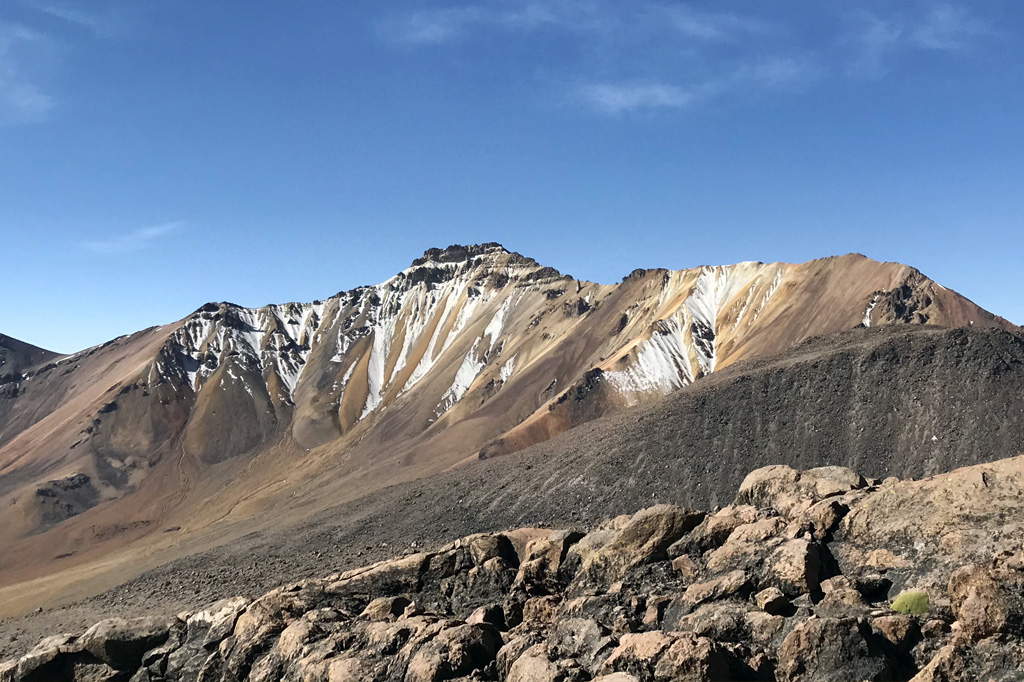 ⛰️ Chachani – the highest of the local peaks
Though it is the tallest of the surrounding peaks, at 6075m, Chachani is the most accessible peak. It is one of the few 6000m mountains that can be summited in a day. One route goes by vehicle up to 4950m. From there you can reach the summit in about nine hours and return in under four hours.
Alternatively, you can break up the experience with a two-day tour with camping. Prices are in the range of $200.
The shorter Volcan Misti (5075mte) is a longer climb. Treks take 2 days and 1 night. You are driven up a trailhead at 4,200m and climb to base camp at 4,700m, from where you tackle the summit the next day. Prices are about $75 USD owing to it being more popular and at a more mild altitude.
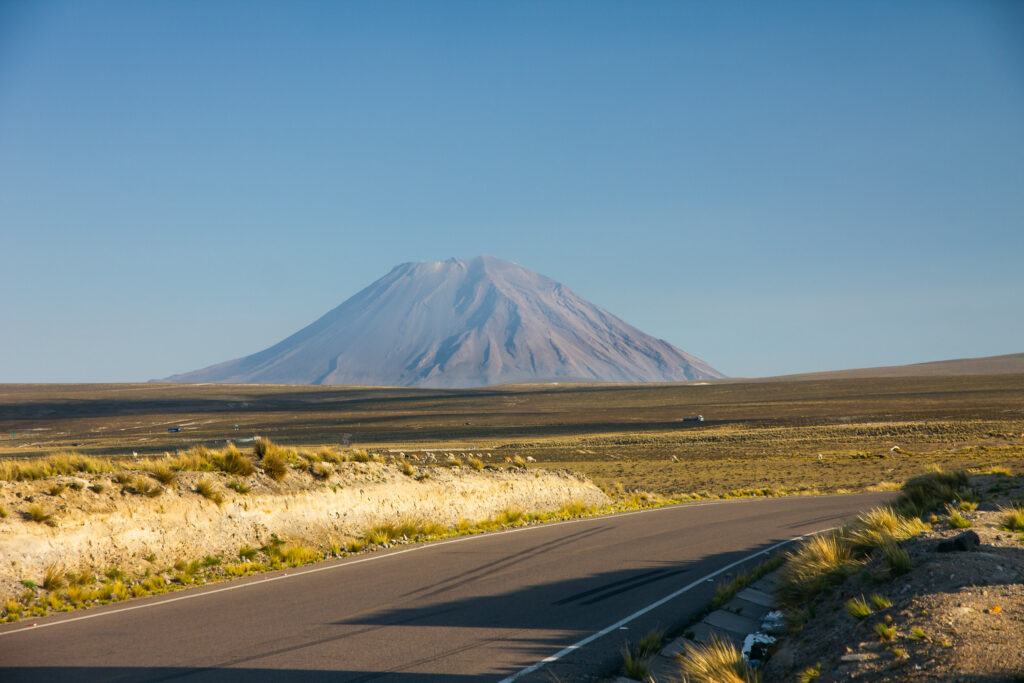 Volcan Misti – an active volcano with Inca terraces and ancient shrines on its slopes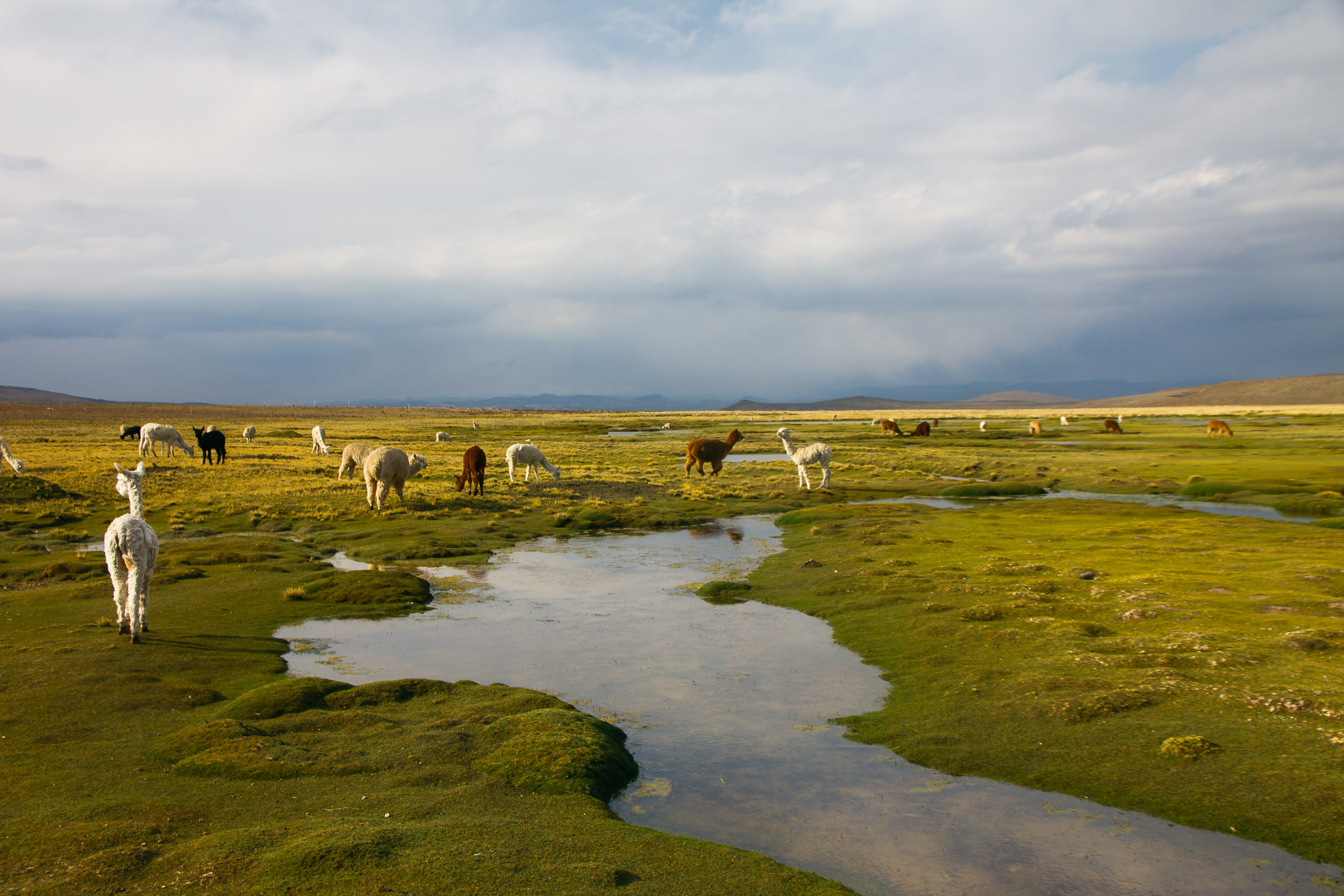
5. Ruta del Silar
Intrigued at where the white stone of Arequipa came from? This tour takes you to the quarries where sillar was extracted.
With close up views of the volcanoes, you will learn how the ashes accumulated over centuries consolidated into this unique stone. The quarries themselves are of a huge scale, and creative miners even carved the facade of Arequipa’s cathedral into the side of a cliff. This is pure Petra vibes and a brilliant photo op.
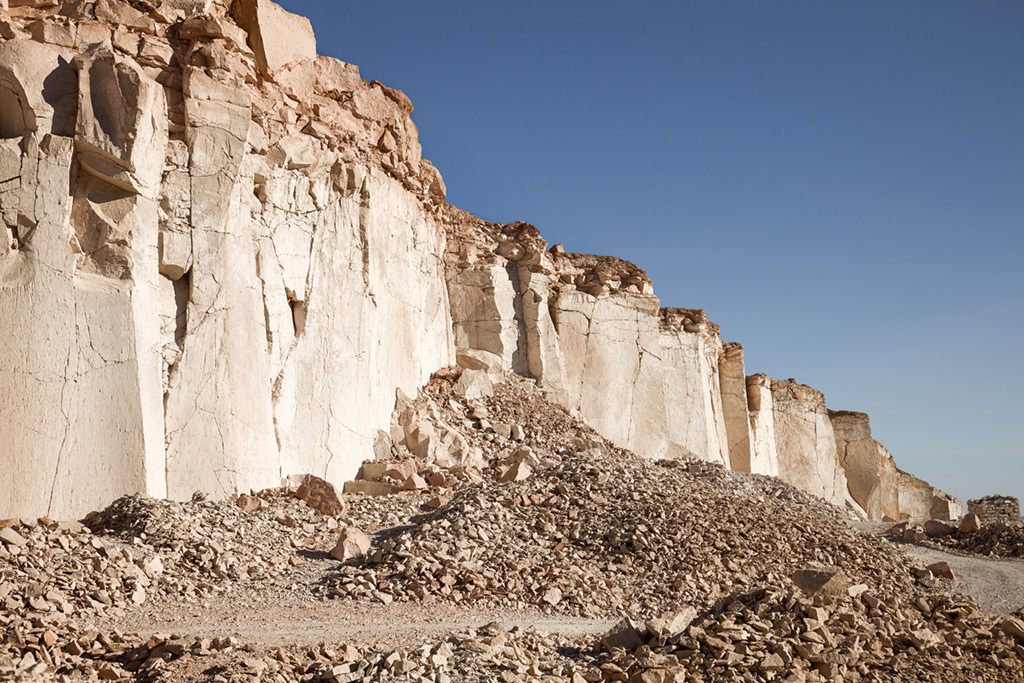
The tours finish with a walk along a winding canyon featuring ancient petroglyphs carved into the side. Tours typically cost 40 soles. Bring a good sunhat and plenty of suncream as the desert sun reflects off the white stone to mimic a microwave.
Follow this journey from quarry to canyon and see for yourself why Arequipa earned its nickname, the White City, on this small-group half-day Sillar Route tour.
On a Peru trip researching binge? Then you don’t want to miss Tam’s journey through the heartbeat of Cusco or his in-depth guide to Huaraz, Peru’s northern trekking capital.
For a complete overview, this compact 2-week itinerary covers all the top highlights in southern Peru.








 English (US) ·